Tampilkan postingan dengan label looting. Tampilkan semua postingan

Senin, 08 April 2013

Looting at Ebla in Syria

On Saturday CJ Chivers reported on looting in Syria, in particular at the ancient site of Ebla:

For decades Ebla has been celebrated for the insights it offers into early Syrian civilization. The scenes here today offer something else: a prime example of a peculiar phenomenon of Syria’s civil war — scores, if not hundreds, of archaeological sites, often built and inhabited millenniums ago because of their military value, now at risk as they are put to military use once more. Seen from afar, Ebla is a mound rising above the Idlib plain. It was first settled more than 5,000 years ago. It eventually became a fortified walled city whose residents worshiped multiple gods, and traded olive oil and beer across Mesopotamia. The city was destroyed around 2200 B.C., flourished anew several centuries later and then was destroyed again. The latest disruption came after war began in 2011. Once rebels pushed the army back and into nearby garrisons, the outcropping upon which Ebla rests presented a modern martial utility: it was ideal for spotting passing government military planes.
The piece also has a very good video report, showing the site: http://nyti.ms/XkR4EY

  1. C. J. Chivers, Syrian War Devastates Ancient Sites, The New York Times, April 6, 2013.

Rabu, 16 Januari 2013

Challenges for Preservation in Dahshour, Egypt


This Pyramid at Dahshour is being threatened
In Egypt at the Dahshour necropolis, modern cemetery expansion and looting are putting the much older pharaonic necropolis at risk. The AP reports that the locals are building new tombs, police are unable to enforce regulations and secure the site. But worst of all the piece speculates that the new Islamist regime holds little respect for the ancient past. Here's a flavor:

In the case of Dahshour, villagers say their cemeteries are full and authorities don't give permits or land for new ones. So they took matters into their own hands and grabbed what they insist is empty desert to erect family tombs. "The dearest thing for us is burying our dead," said Mohammed Abdel-Qader, a resident of nearby Manshiet Dahshour. "This land here is wide and flat, it's a valley. Where are the antiquities they talk about? ... We have no antiquities here."
. . .
The cemetery expansion is the most dangerous encroachment yet because of how close it comes to the Dahshour monuments, which are on the UNESCO World Heritage site list, Younes said. Moreover, Dahshour is largely unexcavated, since the area was a closed military zone until 1996. What remains buried is believed to be a treasure trove shedding light on the largely unknown early dynasties. "When you build something over archaeological site, you change everything. We can't dig in and know what is inside," Younes told The Associated Press. "This is the only virgin site in all of Egypt." 

 The story notes that the construction of new tombs, though illegal, may also be cover for looting. The piece paints a troubling picture. Consider the difficult time Egyptian officials must have had in protecting and preserving a site like this. They must weigh the concerns of angry local populations, be wary of the more dangerous antiquities looters, and also work to preserve the site.

Rabu, 28 Maret 2012

Accounts of Looting at El-Hibeh in Egypt

"Looting is ongoing, there is no protection for the site"
 -Carol Redmount, archaeologist

Marco Werman of PRI talks with archaeologist Carol Redmount about ongoing looting at El-Hibeh in Egypt. In the interview which is embedded below Redmount notes that a criminal enterprise which has "mafia-like" characteristics is systematically looting the site. The leader of the operation is allegedly an escaped prisoner. No security is protecting the site.

I recommend clicking through to see a slideshow of discarded human remains and looted graves. Site protection is the first and probably most important step which can be taken here. Protections at Egypt's points of export and importing checkpoints cannot undo the damage being done here. The looters themselves are motivated by a vulnerable resource and economic hardship. You can follow this site on a facebook site Redmount has created to track the situation and offer assistance.

The facebook page notes a first-hand account from Redmount:

When I returned to Cairo from our dig house last week and our van passed the site heading for the eastern desert highway, we saw about ten men openly looting the mound and desert behind (we have pictures of some of them), with conveniently parked motorcycles nearby. One of our drivers took the same road this past Friday and reported that again numerous men were busy with wholesale looting of the site in broad daylight. This is an on-going crisis. They are destroying the site. The SCA officials have tried everything they could to get the looting to stop. Nothing seems to be having any effect. This is something police and security seem to be ignoring, turning a blind eye to, or worse. We started the Save Hibeh facebook page because we are at our wits end as to what else to do . . .

The solution is for Egypt's authorities to raise the level of security at this site and sites like it, or to enlist the assistance of other agencies from UNESCO or Italy's Carabinieri. We can all collectively pressure Egypt from afar to take these steps, but a nation controls the protection of its own heritage.

Our next-best option is to stop buying the shabtis and kinds of salable objects that come from sites like this without complete histories, adequately documented.
  1. Andrea Crossan, Egypt Looters Ransack Archaeological Sites PRI’s The World (2012), http://www.theworld.org/2012/03/egypt-looters-ransack-sites/ (last visited Mar 28, 2012).

Selasa, 28 Februari 2012

Cambodia Disputing a Koh Ker statue up for auction at Sotheby's


The disputed limestone Koh Ker statue
Cambodia is asking for assistance from the U.S. government in repatriating a limestone statue which was likely looted during the Vietnam War/Khmer Rouge era. Jane Levine, compliance director for Sotheby's argues that "there are widely divergent views on how to resolve conflicts involving cultural heritage objects". Here is mine.

The statue has considerable value, its pre-sale auction price was estimated at between $2-3 million. That estimate will likely be considerably less after the report in the New York times, detailing the dubious history of the object. Sotheby's claims the object was acquired by a "noble European lady" in 1975. Hardly a complete history of the object, and hardly enough to invoke the protections of good faith. The absence of information should not confer the benefits of a good faith purchase. Sotheby's argues the burden should be placed on Cambodia. I wonder though if the blunt reality of two feet without a body might lead a thinking person to a different conclusion. No museum can ethically acquire this object. Though the Norton Simon has a similar statue, also without feet, no word yet on whether Cambodia may seek the repatriation of that statue as well.

I would expect if a resolution between Sotheby's and Cambodia cannot be reached that the government consider using its forfeiture powers on the grounds the statue was under the ownership of Cambodia after a 1925 French colonial law declaring objects in Cambodia to be the exclusive property of the state.

Should the forfeiture proceeding be declined, I would urge Cambodia or its lawyers to consider using a civil action using as a precedent the English case, Bumper Development Corp. v Commissioner of Police for the Metropolis [1991] 1 WLR 1362. That case successfully achieved the repatriation of an object taken from an Indian temple, but it was the temple itself was given legal rights as a party. Perhaps there is a legal personality in Cambodia which might offer a similar connection to this statue.
    A Pedestal in Cambodia, which might be the base
  1. Tom Mashberg & Ralph Blumenthal, Sotheby’s Caught in Dispute Over Prized Cambodian Statue, The New York Times, February 28, 2012, http://www.nytimes.com/2012/02/29/arts/design/sothebys-caught-in-dispute-over-prized-cambodian-statue.html (last visited Feb 28, 2012).

Kamis, 09 Juni 2011

Looting with Dynamite in Greece

This is the first I've head of using dynamite like this to loot sites: six looters in northern Greece have been arrested for using dynamite at an archaeological site to search for gold:


Authorities said Thursday that the four Greek and two Albanian men were arrested Wednesday after police discovered a 12-meter (40-foot) tunnel blasted into the side of a mountain near the city of Kavala, 700 kilometres (435 miles) north of Athens. 
The tunnel, with support columns and a construction track, was first started in 2008, according to local police, who said the suspects would be charged with illegal excavation, illegal use and possession of explosives, and violating archaeological protection laws. 
Archaeological services would not comment on whether they believed there was buried gold in the area.

Kamis, 24 Maret 2011

Protecting Giza from Looters

Giza
"We are paying the price for a greedy, insatiable and unregulated market."

So argues Sarah Marei, an antiquities inspector in Egypt. She describes firsthand the attempts to protect sites in   Egypt:


Under normal circumstances the tourist police are responsible for guarding Egypt’s rich ancient history, from monasteries to temples, synagogues to mosques. But the police presence vanished in the revolution and has yet to return to the sites. The individual initiatives on the part of site inspectors and the townspeople from the remote areas is often the only current protection afforded to some of the world’s most unique and magnificent monuments. 
We continue to work everyday on the makeshift salvage operation in Giza. Volunteers regularly turn up and, as we work, stories are exchanged about the looting where gangs of armed men attacked and shot the guards and plundered the site. 
The work we are conducting is not only physically draining but also emotionally exhausting. My anger is initially directed at the looters and my thoughts keep returning to the same question: why are these criminals, who are Egyptians, looting their own history and their nation’s pride in order to sell it? Only if they stand to gain substantially would they go as far, feeding a market that is standing ready and prepared to amply reward them for their troubles; the better the object, the bigger the reward. 
No indication of the market for antiquities is clearer than in the selection of the sites targeted by the looters in the past few months in Egypt. The overwhelming majority is Pharaonic, followed by Islamic, with Coptic and Jewish so far remaining untouched. We are struggling to protect our sites, facing armed men while we have nothing but sticks, because of a demand from personal collections (both inside and outside Egypt) and from rival institutions seeking a competitive edge.
There's justifiable anger and frustration in the account, and familiar groups to blame: the looters and an unregulated market.

  1. Sarah Marei, Tales from the Egyptian revolution | The Art Newspaper, The Art Newspaper, March 24, 2011, http://www.theartnewspaper.com/articles/Tales+from+the+Egyptian+revolution/23394 (last visited Mar 24, 2011).

Rabu, 09 Maret 2011

Should Street Art Stay where it was Made?

New York and Detroit are both encountering the difficulty which arises when street art achieves recognition.

In Detroit, a group removed a Banksy work from near an abandoned Packard plant. The 555 Non-profit gallery which cut away the wall is now engaged in a legal dispute with the owner of the Packard site over the mural. The dispute brings to mind so many interesting questions. Banksy may have intend his mural to be temporary, and only seen for a limited time in the context of the decaying auto plant. Did the gallery strip the mural of its context by removing it? How is that removal much different than the stripping of pre-Columbian stelae from central and south America? The techniques of sawing are probably similar, and we are left with a decontextualized panel in a different space, left to imagine what the work would have looked like in its original, though perhaps threatened, context.
5 Pointz in Queens

In Queens, a similar difficulty may be emerging. The owner of this warehouse space in Long Island City has announced his intention to develop the warehouse into a residential project, supermarket, and space for artists. As Marlon Bishop reports for WNYC "Since 1993, the former warehouse space in Long Island City has served as an informal training ground and gallery for street artists from around the city. The space is regularly visited by graffiti and hip-hop fans from around the world, earning it a reputation as a street art mecca."

But now that space is being re-purposed by the owner of the building. The warehouse itself may be in need of serious repair anyway, as an external staircase collapsed in 2009. As the owner of the building, Jerry Wolkoff would ordinarily be free to do what he wishes with his building. Yet the artists are upset that their creative space is disappearing and may seek to have the building declared a historical landmark. Will the re-purposed developoment continue to serve the same function of bringing together artists? Surely not. And part of the excitement of the street art scene was its newness and how it emerged as a new art form breaking free of conventions. Yet wider appreciation for street art, and the commodification of these works, are slowly imposing the conventions anyway.
  1. Matthew Dolan, If You Take Street Art Off the Street, Is It Still Art?, wsj.com, March 9, 2011, http://online.wsj.com/article/SB10001424052748704071304576160544164062176.html#articleTabs%3Darticle (last visited Mar 9, 2011).
  2. Marlon Bishop, Queens Graffiti Mecca Faces Redevelopment, WNYC, , http://culture.wnyc.org/articles/features/2011/mar/07/queens-graffiti-mecca-faces-redevelopment/ (last visited Mar 9, 2011).
Video from Detroit after the break:


Selasa, 08 Maret 2011

Archaeologist Pleads Guilty to Artifact Theft

Daniel Amick, an assistant professor at Loyola Chicago pleaded guilty to violating the Archaeological Resources Protection Act after removing 17 prehistoric objects from federal lands in New Mexico. He was sentenced to a year's probation.

Johna Hutira, vice president of Northland Research and a member of the Society of American Archaeology, said she didn't feel comfortable commenting on this particular case, but added that these kinds of allegations are troubling for archaeologists. 
"It's a short jump from a person removing artifacts to wholesale looting," Hutira said, adding that one of the primary roles of archaeology is the preservation of historically significant artifacts that offer insights into early civilizations. 
In general, "if you want to go collect information, you need to get an archaeological permit," Hutira said. "If it's federal lands, you have to play by federal rules." 
Amick's attorney asserted that the professor's decisions were driven by academic pursuit. And had Amick applied for a research permit, he would have been granted one, his attorney said.
Amick is one of two archaeologists on staff at Loyola's anthropology department. 
According to the Loyola website, he received his Ph.D. from the University of New Mexico in 1994. Amick teaches introductory anthropology courses, including Anthropology 101, as well as more advanced classes such as Archaeology Lab Methods.
  1. Erin Meyer, Artifacts stolen: Loyola professor pleads guilty to robbing archaeological site, Chicago Tribune, March 1, 2011, http://www.chicagotribune.com/news/local/ct-met-loyola-guilty-0302-20110301,0,7965373.story (last visited Mar 8, 2011).

Jumat, 04 Februari 2011

Firsthand Report of Looting in Saqqara

The step pyramid of Djoser at Saqqara
There are a number of conflicting reports emerging from Egypt, and as evacuated members of foreign archaeological missions arrive home, we are learning more about what took place in the chaos last weekend. Zahi Hawass is reporting on his website that sites are being protected and that reports of rumors of looting at places like Saqqara are not true. Yet Lee Rosenbaum has been forwarded a firsthand account from a French archaeologists that describes looting last weekend:


The French Archaeological Mission at Saqqara has just left Egypt yesterday and arrived safe today. As most of you are in lack of direct information concerning what happened there, I will try to tell you in brief what I saw. 
On Saturday, the taftish [on-site officer from Egypt's Supreme Council of Antiquities] asked us to stop the work, because the police were not in the capacity of protecting us anymore. In the afternoon, we could see that the police at the police station at the entrance of the resthouses was gone and had left us alone. That is when it all began: Robbers from Saqqara and Abusir became aware of this and they began to spread in the gebel [mountainous desert].

The first afternoon and night, they mainly attacked places which were secured with locks. They broke them and went inside. Most of the time, they destroyed what they saw and not robbed anything, trying to find "treasures." These are not well organised robbers but, mainly, young people from 10 to 20, very probably looking for gold. That is why, when they saw blocks of stone, they most of the time left them, or destroyed them in order to find what was underneath.

I could see them with my eyes the day after, when we made a tour in the gebel with the army. Around 5 p.m., when the sun was still not down, at the muslim cemetery of Abusir, I counted more than 200 young men, excavating in front of us, ready to flee if the army would come down. A tank of the army was there, but they kept on digging. The soldiers were not numerous enough to do anything else than showing they were here. And when we went back, they probably came back in the highs. They were laughing and throwing stones at us. 
. . .
After three days, more and more soldiers arrived in Saqqara and secured more and more of the area. The worse days were Saturday and Sunday. It looks like the army is now securing most of the area, and they made clear that anyone taken would be taken to jail. Hope it works.

Senin, 31 Januari 2011

Reports of Looting and Theft throughout Egypt

An Egyptian Soldier guarding the Cairo Museum
Like many of you I am following the reports from Egypt with great interest. There is a flood of information on the revolution generally, and also a lot of specific information about the destruction over the weekend at the Cairo Museum.

The situation at the Egyptian National Museum in Cairo seems to have stabilized, with soldiers arresting fifty men who have attempted to break in to the museum Monday. Yesterday Zahi Hawass faxed a report, which was posted on his blog.

 Now reports are emerging about damage and thefts at sites elsewhere in the country. Much of it, I am sorry to say, is disheartening. These reports are very early, and should be taken with a healthy dash of skepticism. Yet we all know that there are places where many of these objects will be bought and sold. The antiquities trade does not distinguish the licit from the illicit. Vast storehouses and sites are at risk. The United States will soon have to consider emergency import restrictions, and monitor the trade as best we can. Yet one can't help but feel frustrated at the destruction which may be taking place.

The Egyptian newsblog Bikyamasr is reporting widespread looting of museums and antiquities thefts all over the country:


According to antiquities official Mohamed Megahed, “immense damages to Abusir and Saqqara” were reported. Looters allegedly have gone into tombs that had been sealed and destroyed much of the tombs and took artifacts.
“Only the Imhotep Museum and adjacent central areas were protected by the military. In Abusir, all tombs were opened; large gangs digging day and night,” he said.
According to Megahed, storage facilities in South Saqqara, just south of Cairo has also been looted. He did mention it was hard to ascertain what, and how much, was taken.
He said Supreme Council of Antiquities (SCA) officials “are only today [Sunday] able to check on the museums storage, but early reports suggest major looting.”
He called on the international archaeology community to issue a “high alert” statement on Old Kingdom remains and Egyptian antiquities in general, “and please spread the word to law enforcement officials worldwide.”
Looters of museums, “who may be encouraged by outside Egypt entities, may try to use general confusion to get things out of the country.”
His statement comes as Al Jazeera and other news networks reported extensively on the small looting at the Egyptian Museum in Cairo in the past two days as police guarding the museum left their posts. Others allege that the police themselves are responsible for the looting.
The Egyptian Museum is home to some 120,000 items and thousands more in storage in the basement.
 What a sad development if museum security really were involved in the looting. Already it is worth asking the difficult question: what could be done to prevent this in the future, and also thinking about answers. One answer might lie with how the guards were treated. Hyperallergic has translated an interview with the former director of the Egyptian Museum Wafaa el-Saddik, published in the German publication Zeit Online, reporting that the Museum in Memphis has been robbed. The thieves may have been Egyptian security guards, who earn as little as 35 Euros per month.

Good sources of information include:


After the jump, a collection of videos of the situation in Cairo (via)


Al Jazeera report of Friday's looting at the Cairo Museum on Friday:


AP video of the army securing the museum:


Zahi Hawass commenting on Saturday:


(cross-posted)

Sabtu, 29 Januari 2011

Hawass says Egyptian Museum "Raided"

Zahi Hawass claimed that two mummies have been destroyed, and the museum was "raided", in an appearance on Egyptian state television:
CAIRO Jan 29 (Reuters) - Looters broke into the Egyptian Museum during anti-government protests late on Friday and destroyed two Pharaonic mummies, Egypt's top archaeologist told state television.

The museum in central Cairo, which has the world's biggest collection of Pharaonic antiquities, is adjacent to the headquarters of the ruling National Democratic Party that protesters had earlier set ablaze. Flames were seen still pouring out of the party headquarters early on Saturday.

"I felt deeply sorry today when I came this morning to the Egyptian Museum and found that some had tried to raid the museum by force last night," Zahi Hawass, chairman of the Supreme Council of Antiquities, said on Saturday.

"Egyptian citizens tried to prevent them and were joined by the tourism police, but some (looters) managed to enter from above and they destroyed two of the mummies," he said.

He added looters had also ransacked the ticket office.

The two-storey museum, built in 1902, houses tens of thousands of objects in its galleries and storerooms, including most of the King Tutankhamen collection. (Reporting by Yasmine Saleh, Writing by Patrick Werr)


Looters destroy mummies in Egyptian Museum-official | News by Country | Reuters

Jumat, 21 Januari 2011

Superindictments and their Consequences

Yesterday there was a series of over 120 arrests of alleged mafia members. Though it is not quite on the same scale, it bears at least a few similarities to the indictments handed down in the Southwest as a part of  operation 'cerberus', or even the searches of California Museums in early 2007. Christopher Beam writes that these large investigations are 'superindictments':


Why one huge arrest, rather than a bunch of smaller ones? "It's a statement," says Jim Wedick, a former FBI agent. "They wanted to say, 'You know what? We are back in town.' " Since 2001, the FBI has shifted its resources away from traditional crime-fighting toward counterterrorism. Thursday's bust is a message from the Department of Justice to organized crime: We haven't forgotten about you.

A message certainly was sent yesterday. By using this large-scale investigation Beam writes that you can encourage individuals to cooperate, informants are almost assured if you arrest a large enough group, and a powerful message is sent. Yet the events in the wake of the Cerberus investigation are sobering. Do law enforcement officials need to weigh the severity of their actions? Or do individuals who break the law earn the hardships which can sometimes emerge.

Cerberus was the frightening three-headed dog that guarded the underworld. The beast prevented souls from crossing into or out of the Hades' dominion. A sad irony then that three suicides emerged from the investigation. The undercover informant who set much of the investigation into motion, and two of the individuals indicted. Antiquities looters have almost certainly changed their behavior. Whether the investigation drove them further underground or caused them to cease the looting remains to be seen. One hopes they have ceased looting of sites, but until the demand for black market antiquities is erased, there will sadly be people willing to risk arrest. Investigators worked very hard to make this case, and agents work tirelessly to police these sites, yet until the demand is eliminated, will these investigations continue?
  1. Christopher Beam, FBI Mafia Arrests: The rise of the superindictment. Slate (2011), http://www.slate.com/id/2281894/?from=rss (last visited Jan 21, 2011).

Selasa, 18 Januari 2011

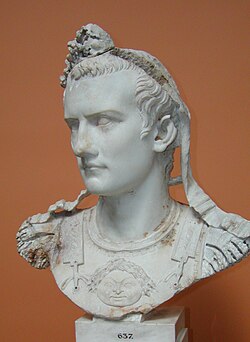
Looted Statute (maybe Caligula) Seized Near Rome

A Bust of Caligula at the Ny Carlsberg Glyptotek
Italian police have arrested a tombarolo with an 8-foot ancient statue not far from Rome. The statue may be worth €1 million. They believe the statue may be of Caligula, and may even have been looted from Caligula's tomb, which has not been discovered. We surely won't know if this tomb or the site was the actual tomb, but if looting is destroying the archaeological record, we are losing information.

Might the record have given us information on Caligula, who may have received a bad rap from the sources which have survived antiquity? Contemporaries describe the emperor as insane, saying he appointed a horse as consul, slept with his sisters, and killed often. But these might have been claims made by his political enemies in the senate and elsewhere—perhaps not too different from today's politics. After all, how could the son of Germanicus (my favorite Roman) have been such a bad guy. Caligula only ruled from AD 37-41, before he was assassinated.

I wonder where this statue was going to be sold? The United States, the middle-East, Asia? Excavations will start to reveal the archaeology of the site where the tomb raider unearthed the massive statue.

  1. Tom Kington, Caligula's tomb found after police arrest man trying to smuggle statue, The Guardian, January 17, 2011, http://www.guardian.co.uk/world/2011/jan/17/caligula-tomb-found-police-statue (last visited Jan 18, 2011).

Kamis, 02 September 2010

Craig Childs on Archaeology

Craig Childs talks to NPR about his new book "Finders Keepers":

Author Craig Childs' new book, Finders Keepers: A Tale of Archaeological Plunder and Obsession, reads almost like a thriller, chock-full of vendettas, suicides and large-scale criminal enterprises dedicated to the multimillion-dollar trade in antiquities.

Childs tells NPR's Audie Cornish that emotions run high in the world of antiquities. "There's such an attachment to what is the right and wrong thing to do with these objects," he says. "What is legal? What is illegal? It really rises to the surface to where I know some archaeologists who want pot hunters dead, and I know pot hunters who want archaeologists dead." His book follows several families of pot hunters who ran afoul of the government after digging up relics on public land.

And many objects now in museums may not be legal, Childs says. For example, the famous Euphronios krater, an ancient Greek vessel for mixing wine and water, stood in the Metropolitan Museum of Art for almost 40 years. "You'd go into the Met and there it was, in its own display case," Childs says. "Just beautiful paintings of warriors and gods all around it, one of the finest Greek vessels ever found, and it was sold with paperwork that said, you know, this thing is legal." But an extensive investigation proved that the krater had been looted from an Etruscan tomb in Italy, and in 2008 the Met returned it to the Italian government.

Audio after the jump


Jumat, 13 Agustus 2010

Ancient Underground Tomb Discovered in Looting Raid

AP Photo:  Turkish Culture Minister Ertugrul Gunay
 Authorities in Turkey have discovered an "important archaeological site" while searching for looted antiquities, reports the Associated Press.  The discovery was made near Milas, in western Turkey.  This sarcophagus may have contained artifacts, but they have disappeared, likely lost in the illicit trade.  The piece describes the tunnels:

[T]he suspects had dug two tunnels — 6 and 8 meters (yards) long, from the house and an adjacent barn, leading to the tomb that is buried some 10 meters (yards) deep.
They used sophisticated equipment to drill through the thick marble walls of the tomb and were working to remove the coffin from the underground chamber when they were detained, according to the Culture Ministry.
"I would have wished that this (archaeological find) had been discovered through our digs and not through digs conducted by a band of treasure hunters," Anatolia quoted Gunay as saying.
"This is not an ordinary treasure hunt. It is very organized and it is obvious that they received economic and scientific help," Gunay said, adding that Turkey also would investigate the suspects possible overseas links.

  1. Turkey Discovers Ancient Underground Tomb : NPR, , http://www.npr.org/templates/story/story.php?storyId=129174682 (last visited Aug 13, 2010).

Selasa, 01 Juni 2010

Paracas Textiles

nullJudith Dobrzynski tries to track the disposition of Paracas Textiles currently 'owned' by the city of Gothenburg Sweden.  There are some reports that the objects may be returned, but the interesting aspect is how the objects are being displayed in Sweden, in a way which throws the doors open to the perils of the antiquities trade and the destruction looting can cause. 

First, Dobrzynski notes the city council was supposed to vote on April 26th on whether the textiles would be returned:


It's possible that the decision was indeed made, but the announcement was put off until fall, when an exhibition on the textiles at the Museum of World Culture -- called "A Stolen World" -- closes. The show states its position pretty baldly: "This is the story of how an unscrupulous policy, the illegal commerce and hunting for antiques strip some cultures of their identity."
It's also possible that exactly how to return them is an issue. According to a short item last January on the website of the Museum Security Network (here), "the delicate nature of Paracas textiles makes them extremely sensitive to the environment such as light and vibrations. And to move them could mean damage beyond repair."
As with many issues of cultural patrimony, there's no easy answer.

Note the description of the exhibition below.  Could we imagine similar objects in the United States on display with such language?  The museum of world culture describes these textiles which are currently on display there:

null
Large quantities of Paracas textiles were smuggled out of Peru and illegally exported to museums and private collections all over the world around 1930. About a hundred of them were smuggled to Sweden and donated to the Ethnographic Department of Göteborg Museum. The accumulation of them used to be a prestigious task, and so, apart from Peru itself, there are Paracas textiles in art museums and private collections all over the world and in many western museums of ethnography. Today textiles from Paracas are among the most sought-after heritage objects in the illegal market.

More is known today concerning the problems associated with looted and smuggled artefacts, and discussions are in progress concerning the line which museums should take regarding dubious items in their collections. How should we relate to this part of history?

Kamis, 25 Maret 2010

On Looting in Lebanon

 It should not really come as a surprise that Lebanon has experienced problems with looting given its rich ancient past, troubled recent past, and location at the crossroads of commerce in the Mediterranean.  It also has a connection with the Sevso Treasure—a forged Lebanese export permit meant that Lebanon intervened in the legal dispute with the Marquess of Northampton,  Croatia, and Hungary.  The Marquess' Trust retained possession of course, and Lebanon withdrew from the action when the export permit was revealed to be a forgery.

But it also has a rich material heritage.  An anonymous looter tells Rana Moussaoui that:


"I know that these are historical artifacts, but much of the time I don't know their exact value," Abu Nayef admitted to AFP in his garden in Baalbeck.
"Sometimes we even move from one piece of land to another through tunnels, if we think we can find new vestiges," he added.  . . .
"I have a wife and six children to support, and I do so through this business," he explained.

This problem plagues a number of nations, but Lebanon has had particular difficulty.  Looting became widespread during the civil war between 1975-1990.  Funding for heritage preservation and policing is lacking, and there are a number of important sites.  In what is an otherwise sound article, Moussaoui criticizes the National Museum in Beirut for "showcasing 2,000 archaeological relics" while "hundreds of thousands of other pieces are gathering dust in storage".  That ratio could probably be found in just about any museum; what goes on display is only the tip of the iceberg.  It may not be fair to criticize Lebanon for what is a common situation all over the World.

Rana Moussaoui, Lebanon's archaeological sites a pillager's paradise, AFP Mar.25, 2010.

Selasa, 12 Januari 2010

History and Looting in Costa Rica

guayabofromabove.jpgMaggie Koerth-Baker has a terrific two-part series on the ancient Chibchan culture in Costa Rica at BoingBoing.  The ancient CAribbean shares many characteristics with the ancient Mediterranean, in which a number of cultures traded and impacted each other.  Yet Costa Rica receives relatively little attention:

Despite a scarcity of giant tourist-attracting monuments, ancient Costa Rica was a pretty hopping place—a nexus of trade where the cultures of Mexico and Central America met those of northern South America, and elements of both were incorporated into the unique and diverse Chibchan culture. Gold ornaments, jade carvings and pottery are literally just below the surface, uncovered by modern construction—or even just poking around in the backyard. So why the low profile? Blame the combined forces of local climate, indigenous tragedy and looting as national pastime.

She talks with Michael Snarskis, an archaeologist examining ancient Costa Rican cultures.  The series does a terrific job documenting the damage done by looting, something archaeologists must account for in nearly every excavation in Costa Rica and elsewhere.  Are there any archaeological sites not at risk from looters?


Ancient Costa Rica Part I: Lost history in the land of the crossroads
Ancient Costa Rica Part II: The narrow road to Guayabo

Senin, 11 Januari 2010

Making up for Looting with Art


Artist Andy Holden visited the Great Pyramid of Giza when he was 12, and took home an illegal souvenir.  He "broke off a lump of stone from the side".  He says that when his parents discovered his theft "they were furious and it ended up becoming this terrible guilt object".

Now, in an effort to make amends Holden has created a colossal knitted replica of the small rock at Tate Britain.  he also has a video piece in which he is shown climbing the Pyramid and returning the rock to the place from which it was stolen.  This was a theft, one wonders if Holden approached the Egyptians about his installation and return.  He's doing the right thing now, though now he is profiting off of the theft, in a slightly more palatable way.  The display now reveals the ease with which ancient monuments can be damaged, and perhaps will serve as a reminder for the next set of parents to keep a closer watch on their little looters at important monuments.

    Roya Nikkah, Tate Show reveals artist's pyramid theft, The Telegraph, Jan. 10, 2010.

Sabtu, 12 Desember 2009

Italy Recovers 1,700 Looted Antiquities

The AP is reporting that Italian authorities have uncovered a looting network which raided tombs outside Naples and Venice.  The objects were then illegally exported to market nations like the United States.


During more than a year of investigations, authorities recovered nearly 1,700 statues, vases and other artifacts dating from pre-Roman times to the heyday of the empire. Police flagged 19 people for possible investigation by prosecutors.  The artifacts were mainly dug out from tombs in the areas around Naples and Venice and included a bronze bust of the emperor Augustus, customs police in Rome said.  Part of the loot had been smuggled to the United States to be sold to collectors, they said.  The Italians said they worked with U.S. Immigration and Customs Enforcement in New Haven, Connecticut, to recover 47 ceramic and bronze statutes that had been looted from a tomb in southern Italy dating between the 6th and 5th centuries B.C.


  1. The Associated Press: Italian police recover hoard of looted artifacts, Associated Press, December 11, 2009.